Mcgraw Hill’s Essential English irregular verbs Guide
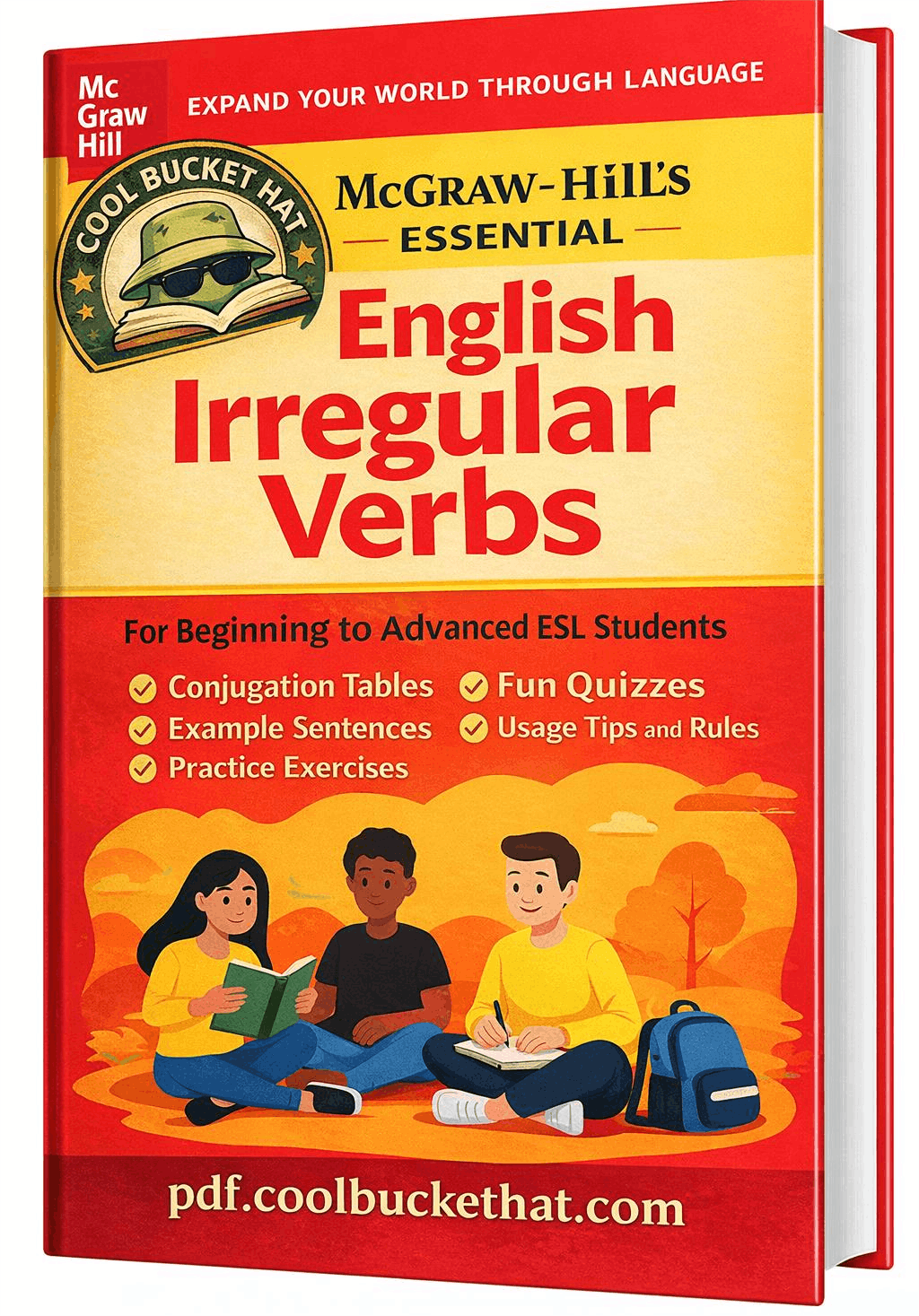
Mcgraw Hill’s Essential English irregular verbs is a powerful learning tool for students who want to master one of the most challenging parts of English grammar. Irregular verbs often confuse learners because they do not follow standard patterns. Instead of adding “-ed” to form the past tense, these verbs change in unique ways. Therefore, a structured and reliable guide becomes necessary.
In this article, you will explore why irregular verbs matter, how this resource helps learners, and how it can be used effectively for long-term success. The content is written in a clear and simple style so it can be easily understood by students, teachers, and self-learners.
Why Irregular Verbs Are Important in English
English grammar may look simple at first glance. However, irregular verbs create difficulty for many learners. For example, the verb “go” becomes “went,” not “goed.” Similarly, “take” changes to “took,” and “see” becomes “saw.” These forms must be memorized because no universal rule can be applied.
Irregular verbs are frequently used in daily conversation, academic writing, and professional communication. Without mastering them, sentences may sound unnatural or incorrect. As a result, confidence may be reduced.
That is why structured practice is essential.
Understanding the Purpose of This Resource
Mcgraw Hill’s Essential English irregular verbs was created to simplify the learning process. Instead of presenting long and confusing lists, it organizes verbs in a logical and easy-to-follow way. Clear examples are provided so learners can see how each verb works in context.
In addition, explanations are written in simple language. This improves readability and helps learners stay focused. Because of its organized structure, progress can be tracked step by step.
Common Challenges Learners Face
Before discussing solutions, it is helpful to understand common problems.
1. Memorization Overload
Many students try to memorize hundreds of verbs at once. Consequently, they feel overwhelmed. When too much information is studied in one sitting, retention becomes difficult.
2. Confusion Between Past and Past Participle
Some verbs have similar forms, while others are completely different. For instance:
Begin – Began – Begun
Break – Broke – Broken
Because patterns are inconsistent, mistakes are often made.
3. Limited Practice in Context
Learning verbs without example sentences reduces understanding. If verbs are not practiced in real sentences, they are quickly forgotten.
These challenges can be reduced when a structured guide is used consistently.
Key Features That Make It Effective
Organized Verb Lists
Verbs are grouped in logical categories. Some are arranged by similarity in spelling. Others are organized by frequency of use. This structure makes memorization easier.
Clear Example Sentences
Each verb is shown in practical sentences. For example:
By seeing verbs in action, learners understand both meaning and usage.
Practice Exercises
Exercises are included to test understanding. Fill-in-the-blank tasks, sentence correction activities, and short quizzes are often provided. Because practice is included, knowledge is reinforced.
Easy-to-Read Layout
Short paragraphs and clear headings improve focus. Important forms are highlighted. As a result, learners can quickly find what they need.
How to Study Irregular Verbs Effectively
Even the best book must be used properly. Therefore, the following strategies are recommended.
Study in Small Groups
Instead of memorizing long lists, study five to ten verbs at a time. Review them daily. Gradual repetition strengthens memory.
Use Verbs in Sentences
Create your own sentences. For example:
When verbs are used personally, they are remembered longer.
Practice Speaking
Reading verbs silently is helpful. However, speaking them aloud improves pronunciation and confidence. This step should not be skipped.
Review Regularly
Weekly revision is essential. If verbs are not reviewed, they may be forgotten. Consistency leads to mastery.
Why This Resource Stands Out
Many grammar books include irregular verbs as a small section. However, Mcgraw Hill’s Essential English irregular verbs focuses specifically on this topic. Because of this focus, deeper understanding is developed.
In addition, explanations are practical rather than theoretical. Complicated grammar terminology is avoided. Instead, learners are guided through clear examples and exercises.
Furthermore, the book can be used by both beginners and intermediate learners. It is flexible enough for classroom instruction and independent study.
Benefits for Different Types of Learners
Students
School and college students often struggle with verb forms in exams. Incorrect verb usage can reduce marks. With consistent practice, exam performance can be improved.
ESL Learners
For English as a Second Language learners, irregular verbs are particularly challenging. However, structured repetition makes learning manageable.
Professionals
Clear communication is valued in professional settings. Emails, reports, and presentations require correct grammar. Mastery of irregular verbs enhances credibility.
Passive Voice and Irregular Verbs
Irregular verbs are frequently used in passive voice sentences. For example:
In passive structures, the past participle form is required. Therefore, knowledge of all three forms is important.
When learners understand past participles clearly, passive voice becomes easier to construct. This improves both writing and speaking skills.
The Role of Repetition and Practice
Learning irregular verbs is not a one-time task. It is a continuous process. Research shows that repetition strengthens neural connections in the brain. Therefore, regular review is recommended.
Flashcards, quizzes, and daily practice sessions can be used. Some learners prefer writing verbs by hand. Others prefer digital tools. Regardless of the method, consistency is key.
Integrating the Book Into a Study Plan
To achieve the best results, this guide can be integrated into a weekly plan.
For example:
Monday: Learn 10 new verbs
Tuesday: Practice exercises
Wednesday: Create sentences
Thursday: Review past lessons
Friday: Take a short quiz
Weekend: Revise weak areas
When a structured schedule is followed, improvement becomes visible within weeks.
Long-Term Impact on English Fluency
Fluency is built on small grammar components. Irregular verbs are one of those components. Although they seem minor, they are used daily.
Once mastered, sentence construction becomes natural. Speaking flows smoothly. Writing becomes clearer. Most importantly, confidence increases.
Because irregular verbs appear in conversations, books, movies, and news reports, their mastery improves overall comprehension. Listening skills also benefit.
Final Thoughts
Mastering irregular verbs may seem difficult at first. However, with the right approach, success is achievable. Mcgraw Hill’s Essential English irregular verbs provides structured guidance, clear examples, and practical exercises. It simplifies a complex topic and makes learning manageable.
If you are serious about improving your grammar, consistent practice should be prioritized. Small daily efforts will produce strong long-term results. Over time, irregular verbs will no longer feel confusing. Instead, they will become a natural part of your English communication.
By using Mcgraw Hill’s Essential English irregular verbs wisely and regularly, learners can build accuracy, confidence, and fluency in English.