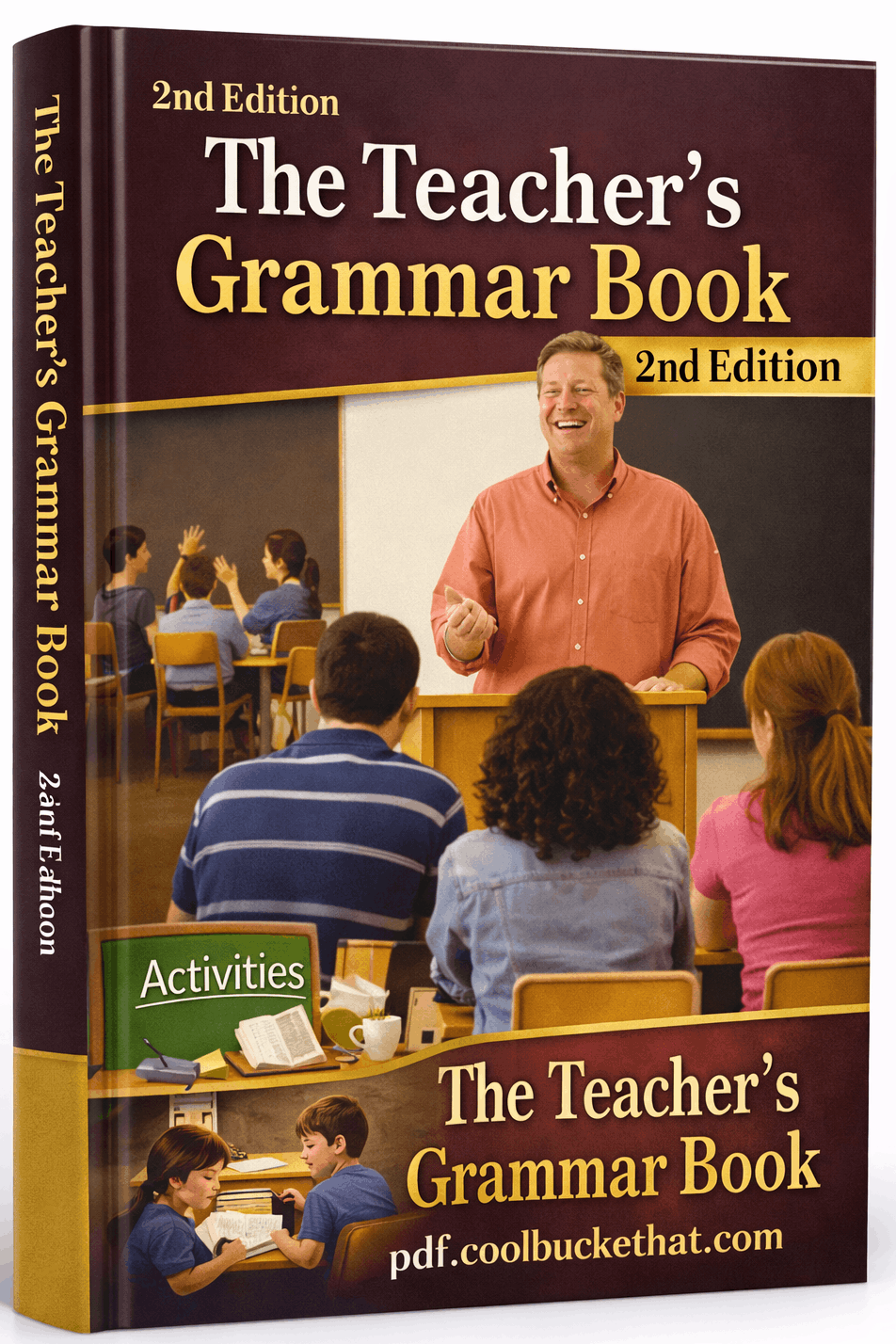
The Teacher’s Grammar Book – 2nd Edition Guide
The Teacher’s Grammar Book – 2nd Edition is a practical resource designed to help educators understand and teach English grammar more effectively. Teaching grammar is not only about knowing the rules. It is about explaining those rules clearly, anticipating student mistakes, and presenting information in ways that promote real understanding.
Many teachers feel confident using English. However, when students ask deeper grammar questions, clear explanations may become challenging. A structured grammar reference book helps teachers strengthen both subject knowledge and classroom techniques. In this guide, we will explore what makes this type of resource valuable and how it supports professional development.
Why Teachers Need a Strong Grammar Foundation
Students depend on teachers for accurate explanations. If grammar is taught unclearly, confusion increases. As a result, learners may develop long-term mistakes.
A strong grammar reference helps teachers:
Grammar knowledge also supports effective lesson planning and assessment design.
What Makes The Teacher’s Grammar Book – 2nd Edition Valuable
A second edition of any teaching resource often includes updated explanations, improved examples, and clearer organization. Modern editions usually reflect changes in language usage and teaching methodology.
Key strengths typically include:
Clear rule explanations
Real-life examples
Error analysis sections
Practice exercises
Teaching tips
These features make the book useful not only for study but also for classroom reference.
Core Grammar Areas Covered
A comprehensive grammar book for teachers usually covers major areas in depth.
1. Parts of Speech
Understanding parts of speech is fundamental. These include:
Nouns
Verbs
Adjectives
Adverbs
Pronouns
Prepositions
Conjunctions
Articles
Teachers must be able to explain how these elements function in sentences. For example, distinguishing between adjectives and adverbs is essential for preventing common student errors.
2. Verb Tenses and Aspect
Verb tenses are often the most challenging area for learners. Therefore, teachers must understand not only structure but also usage.
Key areas include:
Present simple vs. present continuous
Past simple vs. present perfect
Perfect and perfect continuous forms
Future forms (will, going to, present continuous)
Clear explanations help students understand time relationships, not just verb forms.
3. Sentence Structure
Effective grammar teaching includes understanding sentence patterns such as:
Simple sentences
Compound sentences
Complex sentences
Conditional sentences
Teachers should explain how clauses connect and how punctuation affects meaning.
4. Modal Verbs
Modal verbs often confuse learners because their meanings change based on context.
Examples include:
Can
Could
May
Might
Must
Should
Teachers must explain differences between obligation, permission, possibility, and advice.
5. Common Learner Errors
One of the most valuable features of a teacher-focused grammar book is error analysis.
Common errors include:
Understanding why learners make these mistakes helps teachers address them effectively.
Teaching Strategies Included in the Book
Beyond rules, effective grammar books provide practical teaching advice.
Using Examples Effectively
Examples should be:
Clear
Relevant
Simple
Context-based
Students understand grammar better when examples connect to real-life situations.
Encouraging Inductive Learning
Instead of explaining rules immediately, teachers can present examples first. Then students identify patterns.
For example:
She is reading.
They are playing.
I am working.
Students notice the “be + verb + ing” pattern before the rule is explained.
This method promotes deeper understanding.
Integrating Grammar with Communication
Grammar should not be isolated from speaking and writing. Activities may include:
When grammar is practiced in communication, retention improves.
Supporting Teacher Confidence
Confidence in teaching grammar grows through preparation and practice. A structured resource helps teachers feel secure when explaining complex topics.
Additionally, reviewing grammar regularly keeps knowledge sharp. Even experienced educators benefit from refresher study.
The Teacher’s Grammar Book – 2nd Edition serves as both a reference guide and a professional development tool.
Using the Book for Self-Study
Teachers can use the book to:
Review challenging grammar areas
Prepare lesson explanations
Create exercises
Anticipate student questions
Self-study improves classroom clarity.
Adapting Grammar Teaching for Different Levels
Not all students need the same depth of explanation.
For beginners:
For intermediate learners:
For advanced learners:
Flexibility is key.
Continuous Professional Development
Teaching grammar effectively requires lifelong learning. Language evolves, and teaching strategies improve over time.
Teachers can continue developing by:
Attending workshops
Participating in training programs
Reading educational research
Collaborating with colleagues
A strong grammar reference remains an essential tool throughout a teaching career.
Final Thoughts
The Teacher’s Grammar Book – 2nd Edition provides structured support for educators who want to teach grammar clearly and confidently. It combines rule explanations, practical examples, error analysis, and teaching strategies.
Grammar teaching becomes more effective when knowledge is deep, explanations are simple, and activities are interactive. With the right preparation and consistent practice, teachers can transform grammar from a difficult subject into an engaging and understandable part of language learning.
Strong grammar instruction builds strong communicators. For teachers, mastering grammar is not just a requirement—it is a professional responsibility that shapes student success.