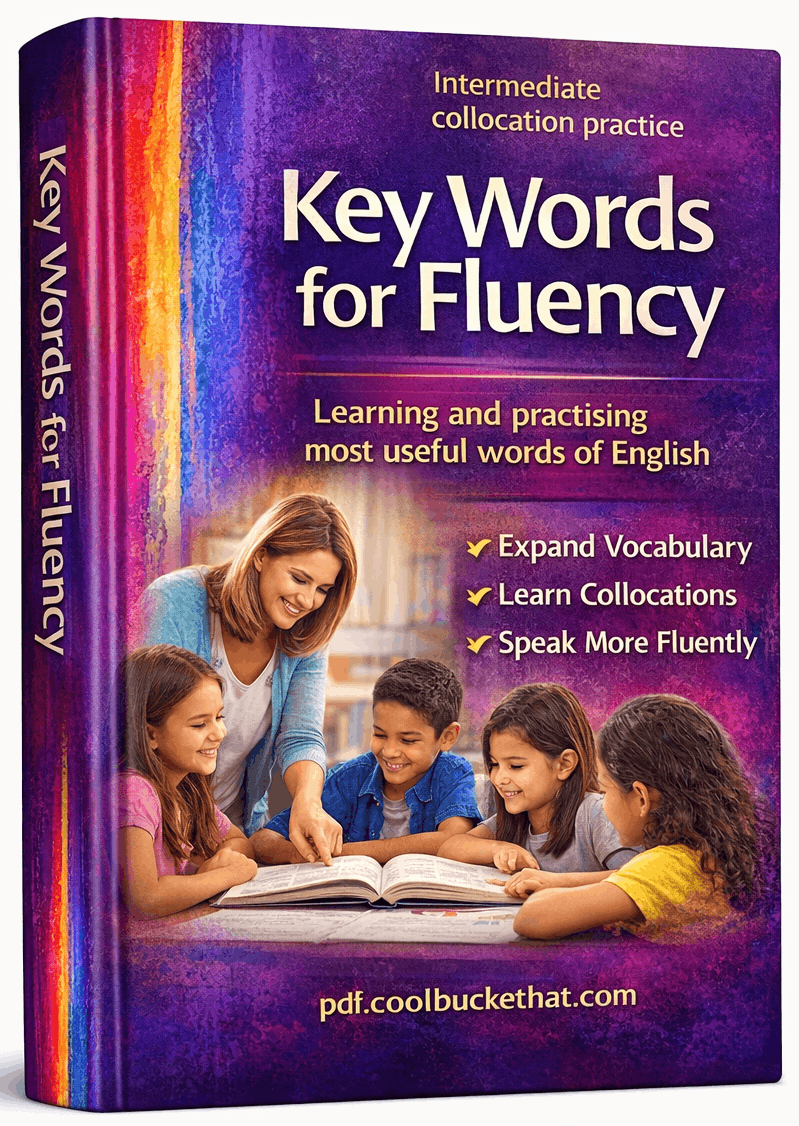
Key Words for Fluency in English Communication
Key words for fluency play a powerful role in helping learners speak English smoothly and confidently. Many students focus on grammar rules and long vocabulary lists. However, fluency often depends on knowing the right words to connect ideas, express opinions, and respond naturally in conversation.
When you use the right key words, your speech becomes organized and clear. You sound more confident. You think faster. Most importantly, conversations flow more naturally.
In this guide, you will learn essential key words for fluency, grouped into useful categories. These words will help you speak clearly in everyday situations, academic discussions, and professional settings.
Why Key Words Improve Fluency
Fluency is not only about speaking quickly. Instead, it is about speaking smoothly without long pauses. Key words help you:
For example, words like “well,” “actually,” and “so” are commonly used by native speakers. They help fill short pauses while thinking.
Therefore, mastering these words can significantly improve your speaking skills.
1. Linking Words for Smooth Conversations
Linking words connect sentences and ideas. Without them, speech may sound broken or robotic.
Adding Information
And
Also
Besides
Moreover
In addition
Example:
Showing Contrast
But
However
Although
On the other hand
Even though
Example:
Showing Cause and Effect
Because
So
Therefore
As a result
That’s why
Example:
These linking words are essential key words for fluency because they make speech organized and logical.
2. Conversation Fillers for Natural Speech
Native speakers rarely speak in perfect sentences without pauses. They use filler words to sound natural.
Common fillers include:
Well
So
Actually
You know
I mean
Let me think
Example:
Well, I’m not sure about that.
Actually, I changed my mind.
These words give you a second to think. They also make your speech sound relaxed and natural.
However, avoid overusing them. Balance is important.
3. Opinion and Discussion Words
Expressing opinions clearly is important for fluency.
Giving Opinions
I think
In my opinion
I believe
From my perspective
As far as I know
Example:
Agreeing
I agree
Exactly
That’s true
Absolutely
I couldn’t agree more
Disagreeing Politely
Using polite disagreement shows advanced fluency skills.
4. Time Expressions for Better Storytelling
Telling stories is easier when you use time markers.
First
Then
After that
Meanwhile
Finally
Eventually
Example:
First, we arrived at the airport.
Then, we checked in.
Finally, we boarded the plane.
Time expressions make narratives clear and structured.
5. Everyday Reaction Words
Short reaction words make conversations more dynamic.
Really?
Wow!
That’s great!
No way!
That’s interesting.
Example:
“I got a promotion.”
“That’s great!”
These small phrases show engagement and confidence.
6. Essential Verbs for Fluency
Certain verbs appear frequently in daily English. Mastering them improves communication speed.
Common fluency verbs:
Get
Make
Take
Have
Go
Come
Give
These verbs are often used in phrases:
Get ready
Make a decision
Take a break
Have a good time
Go ahead
Learning phrases instead of single verbs improves fluency faster.
7. Clarification and Communication Words
Sometimes you need to ask for clarification or explain yourself.
Useful phrases include:
These key words for fluency help maintain smooth communication even when misunderstandings happen.
8. Confidence-Building Expressions
Confidence influences fluency. These phrases help you sound assertive.
I’m sure that…
I’m confident that…
There’s no doubt that…
It’s clear that…
Strong expressions show clarity and authority in speech.
How to Practice Key Words for Fluency
Learning the words is only the first step. Practice is essential.
Here are simple strategies:
Write short paragraphs using linking words.
Record yourself speaking for two minutes using fillers naturally.
Practice conversations with a partner.
Watch interviews and notice how native speakers use connectors.
Daily repetition builds automatic usage.
Common Mistakes to Avoid
While practicing, avoid these errors:
Instead, learn key words in context and observe how they are naturally used.
Final Thoughts
Key words for fluency are small but powerful tools. They connect ideas, organize speech, and make conversations smoother. By mastering linking words, fillers, opinion phrases, and reaction expressions, you will sound more confident and natural.
Fluency does not require perfect grammar at every moment. Instead, it requires flow and clarity. When the right key words become automatic, speaking English feels easier and more comfortable.
Start practicing today. Add a few new key words to your daily conversations. Step by step, your fluency will grow naturally.